23 March 2026
The Power of Jiu-Jitsu for Youth Development: Growth Beyond the Mats
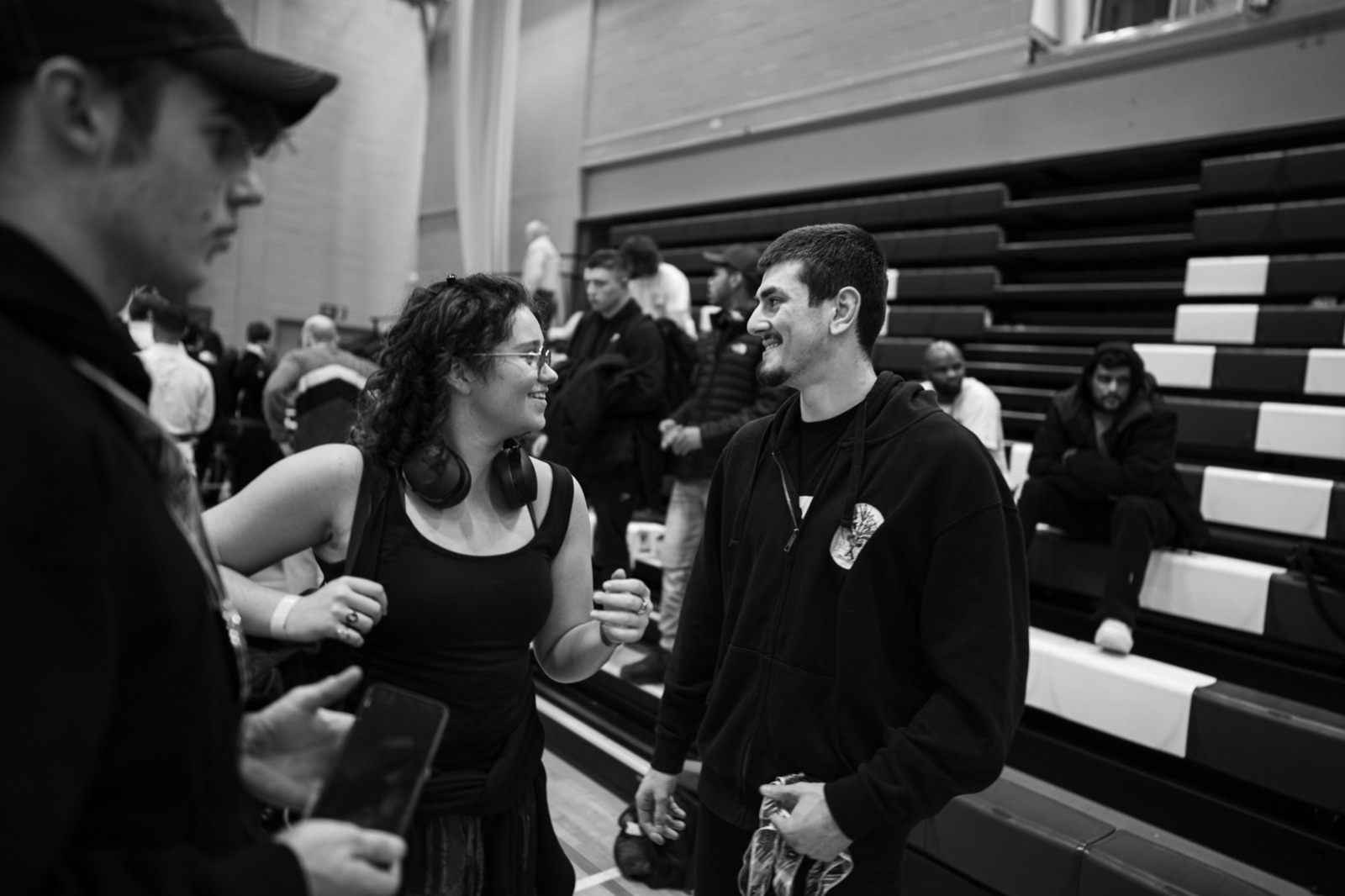
The first time I saw the development of a young person through jiu-jitsu was in my own child. Iris was so keen to make friends and belong but struggled to do so. They always seemed to be on the periphery of social interactions. A square peg in a round hole.
Jiu-jitsu training not only benefited Iris physically by increasing coordination, strength, mobility and flexibility, but it also taught them endurance and resilience. It doesn't get more uncomfortable and confronting than being fully mounted by an older, bigger kid...
However, when the training ends and that older kid helps you up with a big grin and a high-five, there is a shift. A belonging.
When the training ends and that older kid helps you up with a big grin and a high-five, there is a shift. A belonging.
Building confidence through jiu-jitsu
The emphasis of jiu-jitsu classes alongside learning the techniques is inclusivity. It is a sport that is accessible to all body types and all abilities.
As Iris got older, it became clear that mainstream education was dimming their spark. While being homeschooled worked well academically, there was always the concern of social isolation.
Jiu-jitsu played an important role in giving Iris a diverse community. The training environment was incredibly valuable as Iris struggled with confidence and social anxiety, and really didn't feel like they fitted in elsewhere.
The sense of community and camaraderie in the classes is paramount to cultivating an ethos of teamwork and mutual respect. The young athletes learn how to support each other, celebrate each other's progress, and train safely and responsibly. The etiquette of jiu-jitsu includes bowing to the mats, shaking hands before and after training, and showing gratitude to partners. This helps reinforce positive values that young people carry into everyday life.
Empowering kids through youth jiu-jitsu
Jiu-jitsu isn't an easy sport – belt ranks and stripes are not as forthcoming as in other martial arts. It is challenging and it encourages consistency, self-discipline and training for the process, not just the outcome.
Young people learn that there are no shortcuts. That effort and commitment equals improvement. It is apparent that this ethos spills out into other areas of life, so when faced with hard times, the young athletes have clear examples, through the sport, of how they are very capable of doing hard things.
Young people learn that there are no shortcuts. That effort and commitment equals improvement.
A martial art with physical and mental benefits
My second example of seeing how jiu-jitsu could make a huge fundamental difference in a young person's life was with Andrej.
Andrej was 10 when he first stepped onto my mats. He was a migrant from Macedonia, spoke no English and was already being bullied at school. The first time I trained him, he was clearly a very angry young boy.
Instead of focusing on striking or aggression, jiu-jitsu teaches students how to control and overcome opponents using technique, leverage and strategy. With his training partners, Andrej learned fundamental grappling skills, such as:
- Balance and movement
- Escapes and positional control
- Safe takedowns
- Submissions specifically adapted for youth training
Emotional growth through discipline and focus
Over time, I could see he enjoyed the structure of the classes, which typically combine technique drills, games, and supervised sparring (often called "rolling"). The emphasis is always on learning, safety and personal growth, rather than simply winning.
For Andrej, the mats became a place where he could challenge himself, learn from his mistakes, foster a sense of empowerment and grow stronger every week. Emotional control was one of the most prominent ways I saw Andrej develop.
Yes, it's about self-defence – but so much more
Jiu-jitsu requires calm thinking under pressure. Kids learn the value of staying focused, breathing, and solving problems even in difficult situations. Over time, mastering this ability to regulate emotions transfers into everyday life – whether it's handling school stress, dealing with frustration, or managing competition nerves or low self-esteem.
Andrej took part in multiple competitions within a year of starting his training. Competing taught him what it meant to be coachable, to wholeheartedly back himself, and to learn how to manage the sportsmanship emotions of winning and losing on a bigger stage.
As Andrej was being bullied, it was important for him to learn real-world self-defence skills. One of the reasons many parents enrol their children in jiu-jitsu is the practical self-defence aspect.
Brazilian jiu-jitsu focuses on control and escape rather than striking, making it particularly well suited for real-world situations. Children learn how to:
- Maintain distance from an aggressor
- Escape from grabs or holds
- Control someone without causing unnecessary harm
- Stay calm under pressure
Perhaps most importantly, engaging in jiu-jitsu builds awareness and boosts confidence – often the best forms of self-defence. Confident, self-assured children are less likely to be targeted by bullies and are better equipped to handle difficult situations if they arise because they have already learned about their own self-control.
Confident, self-assured children are less likely to be targeted by bullies and are better equipped to handle difficult situations if they arise because they have already learned about their own self-control.
I saw this happen in real time. Before too long, Andrej was no longer being bullied. He walked confidently, and with an encouraging team behind him, he soon became fluent in English and had formed a strong group of good friends.
What kids jiu-jitsu classes can do for your child
Jiu-jitsu offers a great way of maintaining and improving physical fitness, but it is also an excellent tool in learning essential life skills and facing challenges beyond the mat. It is often described as "problem solving under pressure".
Every sparring round presents a new challenge, requiring students to think, adapt, and stay composed. This constant process of challenge and improvement helps children develop valuable life skills, including:
- Perseverance – continuing even when something is difficult
- Patience – understanding that progress takes time
- Adaptability – adjusting strategies when something doesn't work
- Responsibility – taking ownership of personal growth
These skills extend far beyond the gym. Students often see improvements in school, relationships, and other areas of life because jiu-jitsu provides them with the mental resilience required to face challenges rather than avoid them.
Growing up alongside Brazilian jiu-jitsu
Ten years on from when they started, Iris and Andrej still train BJJ. In fact, they both now teach and compete here at Grow Jiu Jitsu full-time.
They have each completed an apprenticeship programme, with modules on learning styles, neurodiversity, mental health awareness, running a business and much more. They both now own their own successful sole trader businesses at the young ages of 18 and 19.
The most beautiful part is they now empower other young people to take ownership of their personal development through the sport. They create safe, challenging and kind training environments for children and adults alike. Environments where students are accepted for who they are as they learn more about themselves, as they reach their potential – and as they grow.
They create safe, challenging and kind training environments for children and adults alike. Environments where students are accepted for who they are as they learn more about themselves, as they reach their potential – and as they grow.
Natalie Day, Founder and Lead Instructor of Grow Jiu Jitsu